
Cats - are they playing or fighting?
Cat body language
play, fight, or bully?
Jamie Flanders CDBC, FPPE, CFDM, CBC
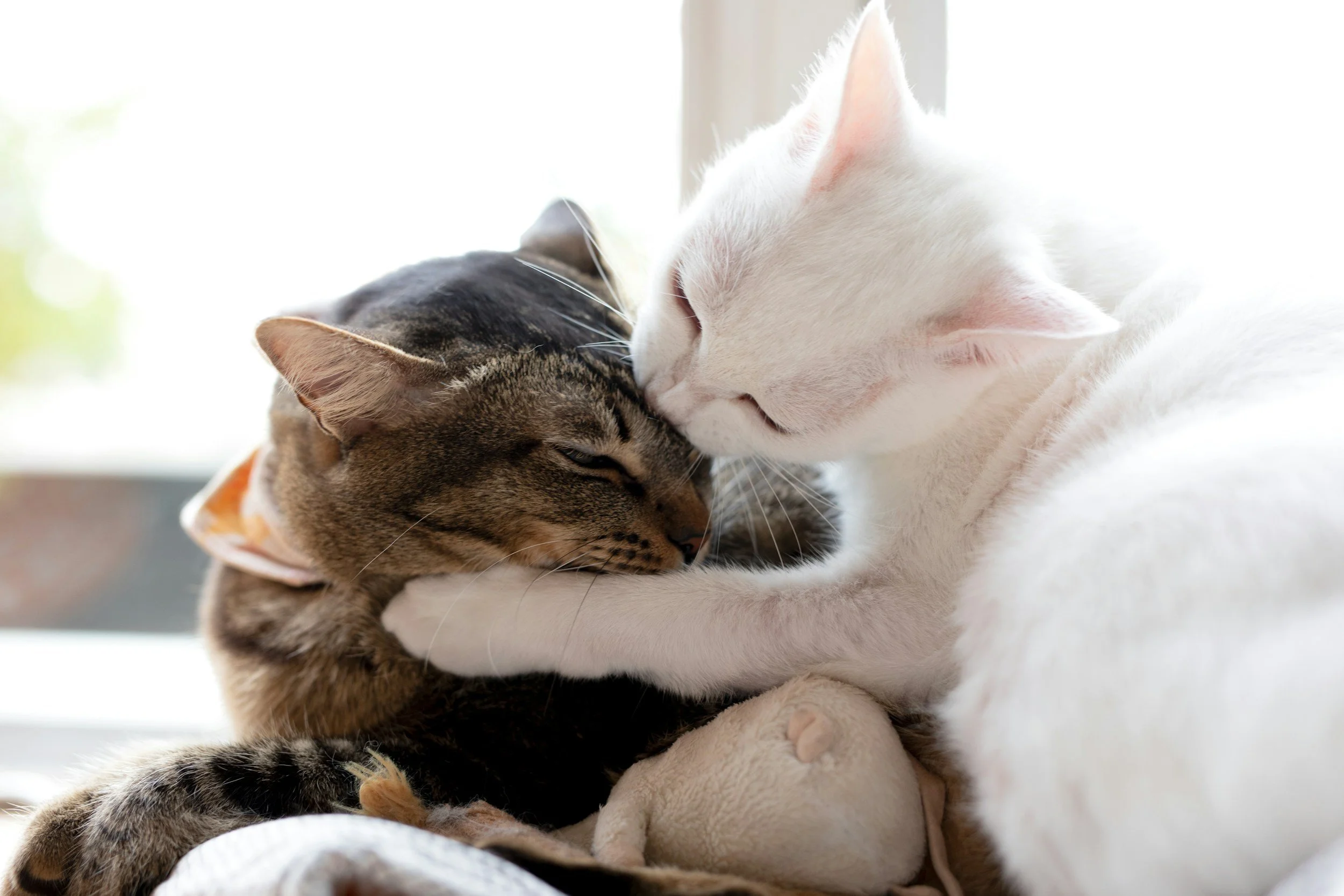
The line between cat play (a ritualized hunting behavior) and fighting can be blurry as many of the body language signals overlap. This ambiguity often makes it difficult to tell if the interaction is consensual play, bullying, or an actual fight. When trying to determine what’s going on between your cats, it’s important to look at their entire body from nose to tail and the context. Do not get stuck focusing on one or two signals such as just what their tail is doing or if you hear vocalizations or not. If you focus on only a few things instead of the entire picture then you’re more likely to misread, misinterpret, and misunderstand your cats.
Cat Play Behavior
If you see these behaviors and body language, there’s a good chance your cat is playing:
Vocalization. Generally, play is quiet, however, it’s not uncommon for playing cats to sometimes hiss. Hissing is a reflex and not a choice, so sometimes excited behavior can result in a hiss (just think about how closely related excitement and anxiety are for us, we can laugh when happy and having fun, and we can laugh when scared or anxious). You may also hear some meowing, or growling, especially during wrestling. The vocalizations will be combined with body language that indicates they are not stressed, angry, or fearful. Take a look at this video for an example: https://youtu.be/XreeFU7RYeI?si=sSglIUhXcIIPLzDS
Mouth. Biting is light and more like nipping. The teeth don’t break the skin.
Claws. Playing cats retract nails.
Fur & Body Posture. Playing cats have relaxed bodies (not tense), and may lean forward. Sometimes they flop over, roll and expose their entire belly. They may gently paw at the other cat or try to grab them. They may hold on to each other and bunny kick with their back legs (claws sheathed). Kittens may also go up on their hind legs, side step, or hop.
Ears. Even when playing, sometimes cats will pull their ears back to protect them, but more often they are in a normal position.
Eyes. When a cat is stalking and about to pounce, their pupils are dilated. As they play with another cat, their pupils may stay larger than normal, or return to normal size.
Whiskers. The whiskers will be forward and fanned out. But they may also hold them against their face during wrestling.
Body Position. Playing cats will alternate who is on top when wrestling.
Chasing. Playing cats will take turns chasing each other.
Tail. A playful cat’s tail will be up and the tip may quiver or move. Because play raises arousal their tail may also puff up. When fur puffs out or stands up this is called piloerection. Piloerection is similar to our goosebumps, it's an autonomic nervous system response and not a conscious choice. You may also see tails twitching back and forth during play, especially during the momentary pauses as they get ready to pounce again.
Activity. Look for reciprocal activity. One cat may run away, but if they return for more interaction, it’s a good indicator of play.
Timing. During play, there is a lot of starting and stopping.
Speed. Play is more inhibited in speed than fighting. It can still be fast but it’s not frenzied.
Swatting. Will be an inhibited speed and claws will be sheathed.
Scratching Objects. While cats play, they’ll stop for a few seconds to scratch objects like scratching posts.
Grooming. Playing cats will often stop and groom themselves or each other.
Easy to interrupt. Playing cats will be easy to distract with treats, toys, trained behaviors (their name, come when called, attention noise), or conditioned words or sounds (attention noise, rattle of a treat bag, opening a can of cat food)
Cat Fighting And Bully Behavior
First, it’s important to remember that cats, especially neutered/spayed cats, rarely want to actually fight. Their behavior patterns and vast array of body language signals are designed to avoid a physical fight, which could lead to injury. Fighting is a last resort.
Look for these behaviors:
Vocalization. Cats fighting will hiss, growl, and yowl. These vocalizations will be combined with other defensive or aggressive body language.
Mouth. Fighting cats will bite each other and pull fur out. Sometimes, the skin is broken and fang marks are left behind. You may also see tongue flicks where the cat will quickly stick their tongue out or lip lick. This is a calming signal, a sign of stress and communication that they don’t want conflict.
Claws. Nails are out and scratches will appear on one or both cats’ faces or bodies. (Note: Even during play, sometimes cats accidentally scratch each other, especially if they don’t have their nails trimmed on a regular basis.)
Fur. Cats will either poof or flatten their fur. This would be their entire body.
Body Posture. Fighting cats stand with an arched back to look bigger or flatten their bodies to look smaller. A fighting cat may also lean back (forward if playing) or lay on one side so they can easily scratch and bite if necessary (see video below). Showing their belly is not a submissive gesture, it is the best position for having all their weapons out and ready. They’ll do this in play as well but their claws will be sheathed and you’ll see other signs of play from the cat's body language and behavior list.
Ears. Since ears are easily injured during a fight, cats pull them back and keep them back to protect them when they are scared or unsure.
Eyes. When a cat is fearful or fighting, their pupils dilate to allow more light into the eye. Pupils will dilate when arousal is high so you can see it in play as well. They may also squint their eyes and furrow their brow.
Whiskers. Fearful cats will pull back their whiskers tight to their face. In addition, offensively aggressive cats will point their whiskers forward.
Body Position. A cat who is bullying another will monopolize top position and not allow the other cat to have a turn on top.
Tail. A thumping tail is usually an indicator that a cat is agitated.
Activity. An aggressor will continue to chase, while the victim may try to flee and hide without returning to interaction like they do when playing.
Timing. Fighting is consistent, without breaks. Playing cats take breaks and start and stop.
Speed. Fighting is frenzied.
Swatting. Will be fast with some weight behind it, claws will be out.
Scratching Objects. Fighting cats will not stop to scratch objects.
Difficult to interrupt. Cats who are fighting will not be easily distracted by treats, toys, trained behaviors, or conditioned sounds or words.
Bullying. When a cat is being bullied they will have many of the behaviors and body language listed above. The bully cat may show more body language and behavior from the cat play behavior list. A bully cat will also ignore all of the signals the other cat is giving them to leave them alone and continue to poke and pester the bullied cat. Here is a video example of what bullying looks like: https://drive.google.com/file/d/1wigOcc1QqR2Dyv5i2fzaeRRZ225YZNVq/view?usp=sharing
Here is a video example of a cat fight. Trigger warning: please do not watch this video if you are sensitive to aggression between animals, and please do not watch this video with sound around your cats or dogs: https://youtu.be/nufaKB1ADu0?si=pK_cHvFjMQi0Q9ze